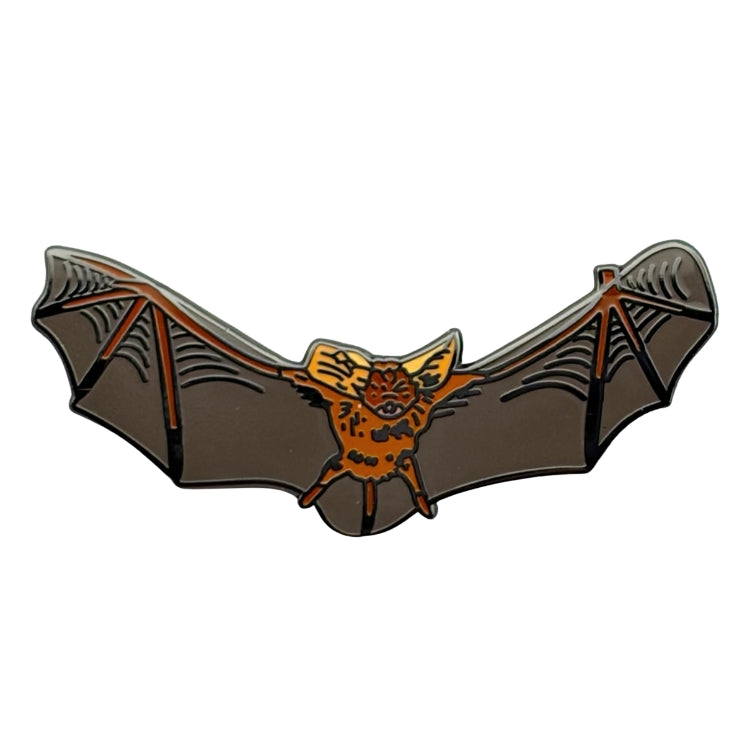
Bat Pin
Bat Pin
Couldn't load pickup availability
Bats are found everywhere in the world except extremely hot, desert environments and cold polar regions.
Biodiversity in Yosemite National Park is intimately linked to cliff-dwelling creatures that visitors hardly see: bats. These species protect the health of park ecosystems by consuming insects, cycling nutrients, and acting as a food source for other iconic and protected park species. As a result, the unprecedented impacts of habitat loss and invasive disease that threaten Yosemite’s 17 species of bats have park-wide implications.
In Yosemite, local bat populations are threatened by white-nose syndrome, a disease that causes near-certain mortality among bat colonies. First discovered in North America in 2006, the disease eradicated 11 million bats in the first five years and is now found throughout California. To address bat mortality from disease and habitat loss, Yosemite’s Big Wall Bats Team has developed novel methods and conducted critical research over the past two years to uncover where park colonies of bats roost, sleep, raise their young, and hibernate.
This data, funded by Yosemite Conservancy, assists park managers in understanding how bat ecology and human interactions are tied to the spread and severity of diseases — including white-nose syndrome — and the impacts of landscape challenges within and beyond park boundaries.
1.5" x .5" pin
To help raise understanding of wildlife in the park, Yosemite Conservancy helps fund critical wildlife research conducted by Yosemite National Park Service. These projects, in turn, inform strategies and conservation plans to help ensure the future of the these wonderful animals. To learn more about the wildlife management projects Yosemite Conservancy is funding visit: yosemite.org
Share